Natural Convection Oven
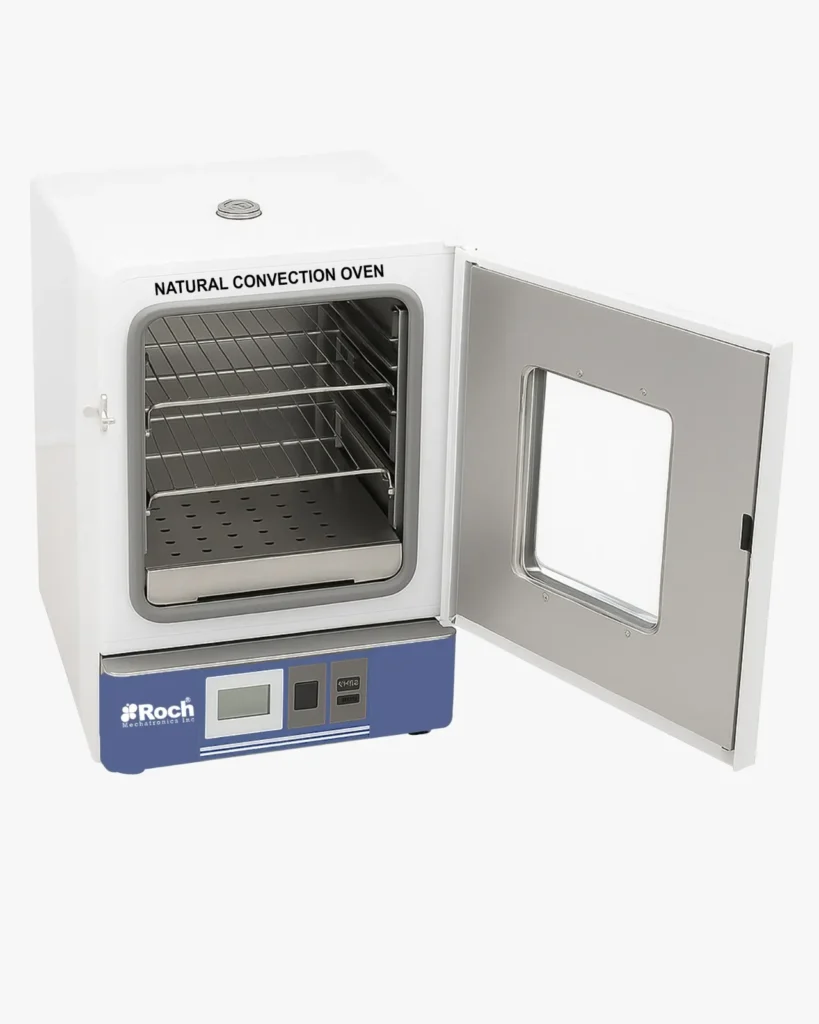
- Technical Design and Construction Silent fan motor to maintain a uniform temperature.
- Safety and Convenience over temperature and current protection capability ensure user safety, adjustable sliding rack.
- Structure made SS-304 with sends and other unmatched features.
- Dust-Free Gravity-Flow Convection
- Digital PID Control
- Tempered Safety Glass Window
- Safety and Convenience
- Security Password Lock
Natural Convection Oven Specifications
| Specification | Details |
|---|---|
| Product Name | Natural Convection Oven |
| Oven Type | Electric Natural Convection Laboratory Oven |
| Temperature Range | Ambient +10°C to 250°C (Optional up to 300°C) |
| Temperature Accuracy | ±1°C |
| Temperature Uniformity | ±2°C |
| Capacity | 28 Ltr to 1000 Ltr |
| Controller | Microprocessor PID Digital Temperature Controller |
| Display | Digital LED Display |
| Heating System | High Efficiency Tubular Heating Elements |
| Air Circulation | Natural Air Convection |
| Inner Chamber Material | SS304 Stainless Steel |
| Outer Body | Powder Coated Mild Steel |
| Insulation | High Density Mineral Wool |
| Shelves | Adjustable Stainless Steel Shelves |
| Door Type | Single Hinged Door with Silicone Gasket |
| Viewing Window | Optional Toughened Glass Window |
| Timer | 0–999 Minutes Digital Timer |
| Safety Features | Over Temperature Protection with Safety Thermostat |
| Ventilation | Adjustable Air Vent |
| Power Supply | 220–240V AC, 50 Hz (Single Phase) |
| Optional Power Supply | 415V AC, 50 Hz (Three Phase) |
| Internal Lighting | Optional LED Light |
| Data Logging | Optional USB / RS485 Interface |
| Mobility | Optional Heavy Duty Castor Wheels |
| Applications | Laboratory Drying Sterilization Heating Testing and Sample Conditioning |
| Model | Capacity | Suitable Applications |
|---|---|---|
| Natural Convection Oven 28 Ltr | 28 Litres | Research Laboratories |
| Natural Convection Oven 45 Ltr | 45 Litres | Educational Institutes |
| Natural Convection Oven 90 Ltr | 90 Litres | Pharmaceutical Laboratories |
| Natural Convection Oven 125 Ltr | 125 Litres | Chemical Laboratories |
| Natural Convection Oven 230 Ltr | 230 Litres | Industrial Quality Control |
| Natural Convection Oven 455 Ltr | 455 Litres | Electronics Manufacturing |
| Natural Convection Oven 645 Ltr | 645 Litres | Material Testing Laboratories |
| Natural Convection Oven 1000 Ltr | 1000 Litres | Large Scale Industrial Applications |
Frequently Asked Questions (FAQ)
What is a natural convection oven and how is it different from a fan oven?
A natural convection oven cooks food using the natural movement of hot air, which rises from the heating elements and circulates gently around the food without the help of a fan. This differs from a forced or fan convection oven, where a built-in fan actively pushes hot air throughout the cavity for faster and more even heat distribution. Natural convection ovens tend to have slightly more temperature variation between the top and bottom of the cavity, which actually works well for dishes like soufflés, custards, and baked goods that benefit from gentler, undisturbed heat.
How do I preheat my oven properly?
Preheating allows the oven to reach the set temperature before you place food inside, which is essential for even cooking and proper rising in baked goods. Simply set your desired temperature and allow the oven ten to fifteen minutes to fully heat up, since natural convection ovens can take slightly longer than fan ovens due to the absence of forced air circulation. You will typically hear a beep or see an indicator light turn off once the target temperature has been reached, at which point your dish is ready to go in.
Why does my food cook unevenly sometimes?
Because natural convection relies on passive air movement, the top of the oven is often slightly warmer than the bottom, which can occasionally lead to uneven browning if dishes are placed on the wrong rack. To minimize this, place your dish on the middle rack whenever possible, avoid overcrowding the oven with multiple trays, and rotate your dish halfway through cooking if you notice one side browning faster than the other.
What type of cookware should I use?
Natural convection ovens work well with most standard oven-safe materials including metal baking pans, glass dishes, ceramic bakeware, and cast iron. It’s best to avoid using cookware that is too large for the cavity, as this can block natural air movement and lead to inconsistent results. Light-colored metal pans tend to produce more even browning, while dark or non-stick pans may cause the bottom of your food to brown faster, so keep this in mind when following recipe timing.
How do I clean and maintain my oven?
Regular cleaning keeps your oven performing well and helps prevent smoke or odors from baked-on residue. Wipe down the interior with a damp cloth after each use once the oven has cooled, and for tougher stains, use a mild oven-safe cleaner or a paste of baking soda and water, avoiding harsh abrasive scrubbers that can damage the interior coating. It’s also a good idea to check the door seal periodically for wear, since a damaged seal can let heat escape and affect cooking performance.