
Phototrophic Growth Chamber
Roch Mechatronics Inc. is a renowned Phototrophic Growth Chamber Manufacturer, Supplier, and Exporter in India, serving research institutes, universities, biotechnology laboratories, and industrial R&D facilities worldwide. With a strong commitment to innovation, reliability, and quality engineering, ROCH delivers technologically advanced chambers designed to support the growth and study of photosynthetic organisms such as plants, algae, and cyanobacteria under controlled environmental conditions.
Our growth chambers are engineered for precise simulation of light, temperature, and humidity, enabling researchers to optimize phototrophic processes for plant science, agricultural biotechnology, and environmental studies.
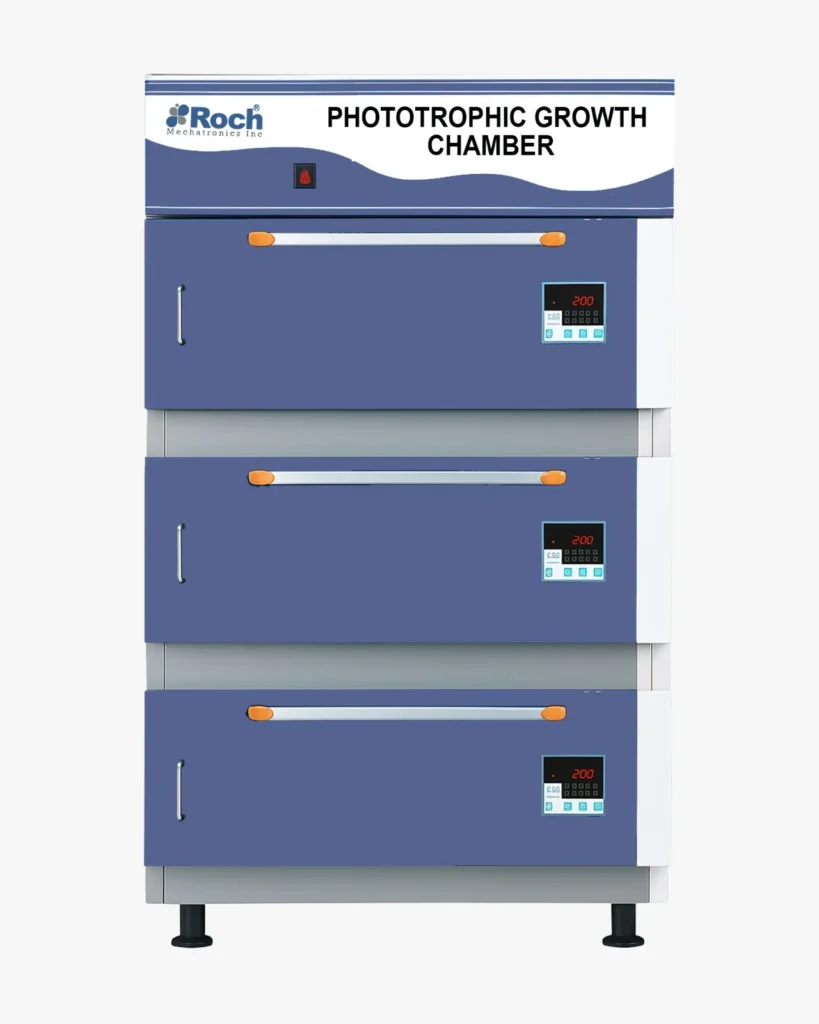
Features of Phototrophic Growth Chambers
Precision Environmental Control: Advanced PID-based digital control system for stable temperature and humidity regulation.
Customizable Illumination: Programmable LED light spectra (cool white, red, blue, far-red) with adjustable intensity to simulate natural or artificial light conditions.
Uniform Light Distribution: High-efficiency reflectors and diffusers ensure even light exposure across all growth shelves.
User-Friendly Interface: Touchscreen controller with real-time data monitoring and alarm systems for safety and reliability.
Energy Efficient Design: Low power consumption with optimized insulation and airflow management.
Data Logging and Connectivity: USB and Wi-Fi options for remote monitoring and data export.
Durable Construction: Powder-coated steel body with corrosion-resistant interiors for long-term performance.
Custom Chamber Sizes: Available in multiple capacities and configurations to suit diverse research needs.
Our Products
Specifications of Phototrophic Growth Chamber
| Parameter | Specification |
|---|---|
| Temperature Range | 10°C to 50°C ±0.5°C |
| Humidity Control | 40% to 95% RH ±3% |
| Light Intensity | 0 – 20,000 Lux (adjustable) |
| Photoperiod Control | 0–24 hours programmable cycle |
| Lighting Source | Full-spectrum LED / Fluorescent |
| Construction | Double-walled, insulated chamber |
| Shelving System | Adjustable stainless-steel trays |
| Controller | Microprocessor / PLC-based touchscreen |
| Power Supply | 230V AC, 50Hz (customizable for export models) |
What is a Phototrophic Growth Chamber?
A Phototrophic Growth Chamber is a specialized controlled-environment system used to study and cultivate phototrophic organisms that depend on light as their primary energy source. These chambers allow accurate control of light intensity, photoperiod, temperature, humidity, and CO₂ concentration, ensuring reproducible and reliable research outcomes.
ROCH Mechatronics Inc. designs these chambers with advanced digital controls, uniform illumination, and customizable configurations suitable for a wide range of experimental requirements.
Why Choose ROCH Mechatronics Inc.?
- ISO-certified manufacturing excellence
- Proven export experience in Asia, Europe, and the Middle East
- In-house R&D and customization capabilities
- Dedicated after-sales service and technical support
- Competitive pricing and timely global delivery
ROCH Mechatronics Inc. continues to be a leading Phototrophic Growth Chamber manufacturer, supplier, and exporter in India and worldwide, offering advanced solutions that empower scientific innovation and sustainable growth.
What is a Phototrophic Growth Chamber and what is it used for?
A Phototrophic Growth Chamber is a controlled environment system designed to support the growth of light-dependent organisms such as algae, cyanobacteria, plant tissue cultures, and other photosynthetic microorganisms. It precisely regulates light intensity, spectrum, temperature, humidity, and sometimes CO2 levels to create optimal conditions for photosynthesis and biomass production. These chambers are widely used in research laboratories, biotechnology companies, pharmaceutical development, and academic institutions studying plant biology, algal cultivation, and photosynthetic processes.
How does the chamber control lighting conditions for optimal growth?
The chamber uses programmable LED lighting systems that can be adjusted for intensity, duration, and spectral output to mimic natural sunlight or provide specific wavelengths beneficial to the organism being cultivated. Users can typically set custom light cycles, such as continuous illumination or alternating light and dark periods, to replicate day-night cycles. Many models allow spectrum tuning across red, blue, and full-spectrum white light to target specific photosynthetic responses or growth stages.
What temperature and humidity ranges can the chamber maintain?
Most Phototrophic Growth Chambers offer a temperature control range typically between 4°C and 60°C, depending on the model, with precision often within plus or minus 0.5°C. Humidity control usually ranges from 20% to 95% relative humidity. These parameters can be programmed to change over time, allowing researchers to simulate seasonal variations or specific environmental stress conditions relevant to their study.
How do I clean and maintain the chamber to prevent contamination?
Regular maintenance involves wiping down interior surfaces with an appropriate disinfectant after each use, particularly around shelving, light fixtures, and ventilation components. Filters, including HEPA filters if equipped, should be inspected and replaced according to the manufacturer’s recommended schedule. It is also important to periodically calibrate sensors for temperature, humidity, and light output, and to check door seals and gaskets for wear to maintain proper environmental containment and reduce contamination risk.
What safety features and certifications should I look for when selecting a chamber?
Look for chambers with alarm systems that alert users to power failures, temperature deviations, or humidity fluctuations that could compromise samples. Safety interlocks on doors and electrical components help prevent accidents during operation. Additionally, chambers used in regulated industries such as pharmaceuticals may need to meet specific certifications like ISO or GMP compliance standards, so it is worth confirming these requirements align with your intended application before purchasing.